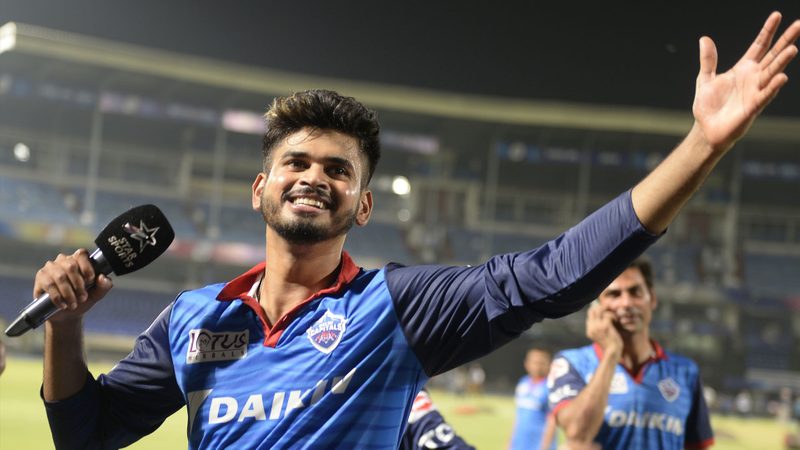
Most effective no. 4 in the Indian T20 League

The job of a number four batsman becomes tougher with the decreasing length of formats, making it the most challenging role in T20 cricket. However, we have seen some terrific performers at number four in T20s over the years, especially in the Indian T20 League.

Since the 2016 edition of the Indian T20 League, a total of 80 batsmen have batted at number four. However, only 16 of them have scored 200 or more runs.

We will analyse how those 16 players have scored their runs at this position and how they stack up against each other in terms of quality.
 

Rishabh Pant head and shoulders above others

The Delhi southpaw has had his struggles at the international level for India. However, no other batsman has been as prolific a run-scorer the last few Indian T20 League seasons.

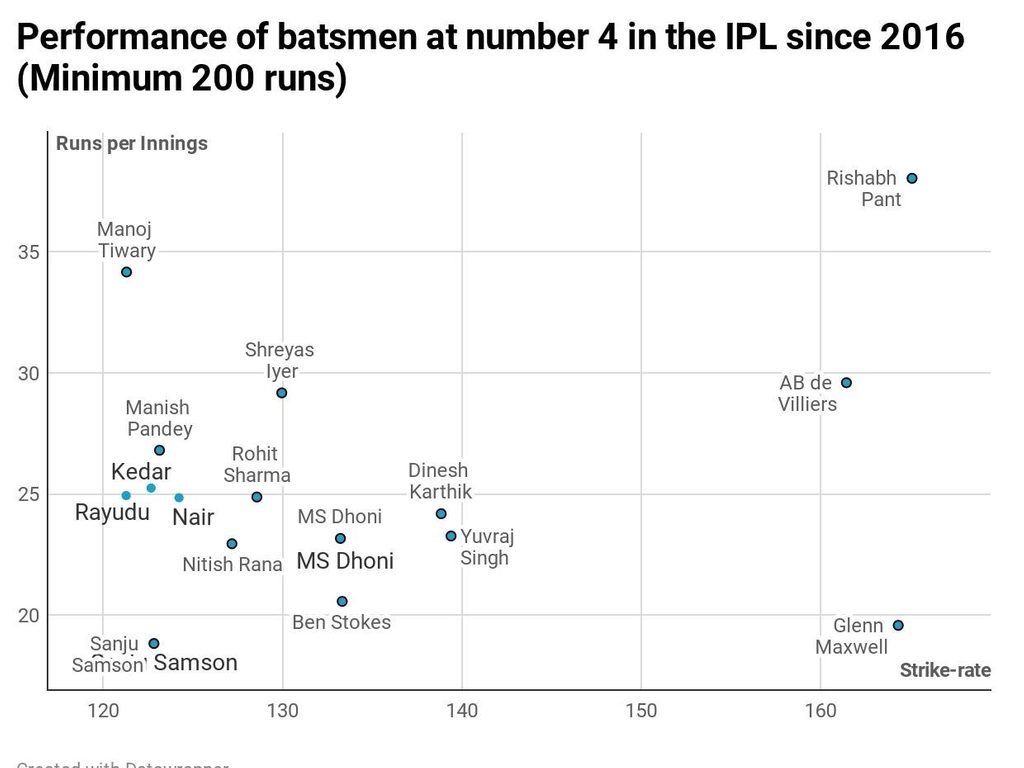
Since 2016, Pant has scored the highest number of runs at number four. His tally of 989 runs has come at a strike-rate of 165.11, the best among these 16 batsmen, and his RpI (runs per innings) of 38.04 hasn't been bettered by anyone in this category either.

Not only that, Pant has the most number of 30+ scores to his name as well, and his rate of scoring boundaries (BpB) of 4.25 is the best among all these players as well.

AB de Villiers excellent as usual

The South African batsman has been the second-most effective batsman at number four during this period. His strike-rate of 161.45 and RpI of 29.60 makes him an excellent asset to have at this position.

In terms of runs, de Villiers is the sixth-best during this period, having amassed 444 runs in a total of 15 innings. He has scored a boundary every 4.51 deliveries while scoring these runs and that is once again the second-best figure among these 16 batsmen.

The job of a number four batsman becomes tougher with the decreasing length of formats, making it the most challenging role in T20 cricket. However, we have seen some terrific performers at number four in T20s over the years, especially in the Indian T20 League (Indian T20 League).
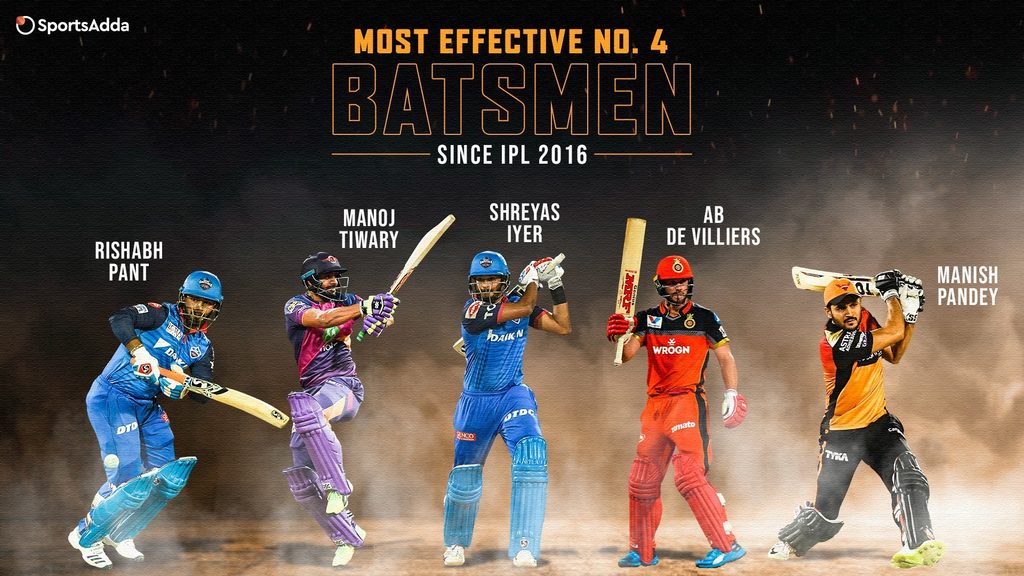
Since the 2016 edition of the Indian T20 League, a total of 80 batsmen have batted at number four. However, only 16 of them have scored 200 or more runs.

Read | Most effective Indian T20 League openers since 2016

We will analyse how those 16 players have scored their runs at this position and how they stack up against each other in terms of quality.

Maxwell a fierce striker but lacks consistency

Glenn Maxwell is one of the most dangerous T20 batters in world cricket but his returns at number four in the Indian T20 League since 2016 hasn't done justice to his potential. Although he has the second-best strike-rate (164.34) among these players, his RpI of 19.58 is the second-lowest. He has had 12 outings at this position since 2016 but amassed just 235 runs.

Manoj Tiwary a reliable accumulator but a slow scorer

The Bengal batsman's RpI of 34.17 is the second-best here but it has been because of his poor strike-rate of 121.30 that he has gone unsold in recent auctions. He played only six innings at this position between 2017 and 2018, amassing a total of 205 runs. That included two fifties as well.

Shreyas Iyer a steady player

The Delhi skipper has been a rock at this position for his team in the last few seasons. Iyer has majorly played the anchoring role and his returns read 321 runs in 11 innings at an RpI of 29.18 and a decent strike-rate of just a shade under 130. He is the glue that holds his team together.

Feature image courtesy: AFP / Michael Bradley
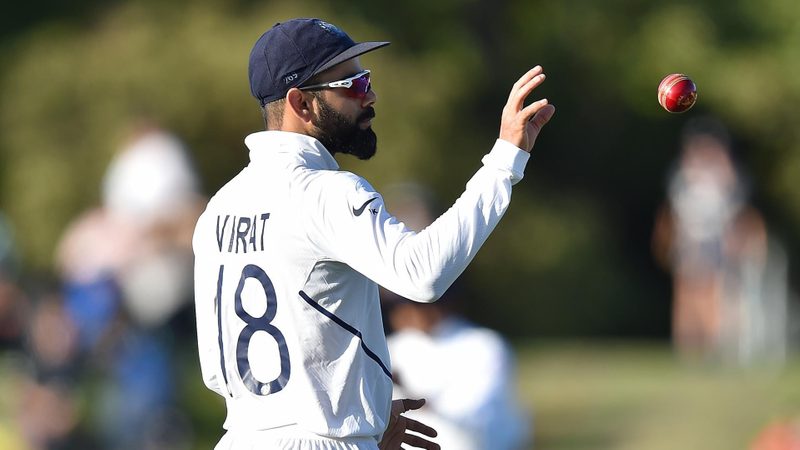
Cricket's 'magic' up in smoke without live audience: Kohli

India captain Virat Kohli believes cricket will be robbed of its "magical moments" if games are forced into empty stadiums when the sport emerges from its pandemic lockdown.

"It might happen. I honestly don't know how everyone's going to be able to take that, because we are used to playing in front of so many passionate people," said the star batsman.

"It will be played at a very good intensity, but that feel of the crowd connecting with the players, everyone feeling that tension around the stadium, those emotions are difficult to recreate," he told the Star Sports television channel on Friday.

The coronavirus pandemic has halted all major sports and cricket is suffering without its cash-rich Indian T20 League which should now be reaching its final stages.

"We will play the sport how it's supposed to be played but those magical moments would be very difficult to come by," Kohli said.

Some European football leagues are already making plans to restart in empty stadiums. But the Indian T20 League has not announced its intentions and there are now major doubts on whether the Twenty20 World Cup will start in Australia in October.

The International Cricket Council has said it is "exploring all options" for the tournament.

Australia's wicketkeeper-batsman Alex Carey, who was to play for the Delhi in the Indian T20 League, said it would be a "hollow feeling" if games are played in front of empty stands.

"Cricket, as we're used to, is going to be different for a bit. There's the T20 World Cup and the Indian T20 League that we're all looking to play, but it's hard to picture anything without the fans," Carey said in an Instagram session with Delhi's official website.

"It's going to be a hollow feeling, but I feel the fans will at least have some live cricket to look forward to on TV."

Feature image courtesy: AFP / Peter Parks

What makes Pat Cummins special?

Pat Cummins ended 2019 as the world's highest Test wicket-taker with quite a big bridge between him and the next best. His 59 scalps were 16 wickets higher than Stuart Broad's 43, the next best in the list. That he has created opportunities to take so many wickets in a bowling attack that has extremely good bowlers shows his value in the Australian outfit in the red-ball cricket.

Cummins' teammates were equally brilliant in the year - Mitchell Starc with 42 wickets, Nathan Lyon with 41 wickets and Josh Hazlewood with 33 wickets all came in the top 10 Test bowlers for 2019. That Cummins still managed to edge ahead is testimony to his skills as a fast bowler in the longest format of the game.

Cummins' career is a resurrected one. He stormed into the scene in 2011, taking a six-fer in his debut Test against the best Test side in the world at the time, South Africa, in the most intimidating away ground in the world, Johannesburg.

Read | Top three outstanding Test knocks by Steve Smith

It took him six years to play Test cricket again as constant injuries meant he could never return to international cricket. When he did, it was least expected that Cummins would go on to succeed across conditions and incredibly consistently. His home and away record are almost exact in terms of average and his record across nations is simply brilliant.

Career Summary        
Host country Overs Wkts Avg Econ SR
in Australia 576.1 71 21.78 2.68 48.6
in Bangladesh 63 6 29 2.76 63
in England 211 29 19.62 2.69 43.6
in India 77 8 30.25 3.14 57.7
in South Africa 199.4 29 20.31 2.94 41.3
           
Host country Overs Wkts Avg Econ SR
Home 576.1 71 21.78 2.68 48.6
Away 550.4 72 21.86 2.85 45.8

"For me I'm always working on things, whether it's trying to get my seam a bit better or try to swing the ball a bit more, try to maintain pace, all those things. It's a constant battle of staying on top of plenty of things. But I've had a pretty good run lately so I can't see it getting too much better than what the last year's been, but hopefully, I can maintain that level," Cummins said last year in a chat with ESPNCricinfo. 

Read | Should ball-tampering be legalised after COVID-19?

The catch here is that Cummins isn't a regular Test seamer. The top of off concept doesn't quite suit him. He bangs the deck, thrives on pace, bounce and subtle seam movement. As such, the lbws and bowleds that generally define a bowler is minimal for Cummins. 

Of his 143 Test scalps, just seven are LBW and just 20 are bowled. A stunning 81.1% of dismissals are caught, a sign that Cummins' modus operandi as a pacer is quite different from regular pacers, yet brutally effective. And this the ability of intimidating batsmen with little talk and more action puts him on the path to greatness.

Year Overs Wkts Avg Econ SR
2011 44 7 16.71 2.65 37.7
2017 295.4 29 29.79 2.92 61.1
2018 314.1 44 19.97 2.79 42.8
2019 440 59 20.13 2.7 44.7
2020 33 4 18.25 2.21 49.5

Since his debut, he has gone at an average greater than 21 just once. In three of the five years he has played international cricket, Cummins averages less than 20 with the ball. Barring an aberration in 2017, the year he returned to Test cricket after a six-year break, Cummins' bowling has been breathtaking. 

That he thrives in a rather unique template across conditions in the same format and yet succeeds shows why he is invaluable in Test cricket and well on his path to finish as one of the game's greatest.

Feature image courtesy: AFP / William West

When John Davison took the World Cup and Canada by surprise

Remember John Davison? Unless you are a huge cricket fanatic, it is unlikely that the name will ring an instant bell. The Australian-born Canadian cricketer played grade cricket in Melbourne but a regular place in Victoria's main team was denied. It was at this time that Davison got an offer to be a player-cum-coach for Canada in the off season.

When Windies elected to field in the 24th match of the 2003 World Cup game at Centurion, little did they anticipate to be treated like club bowlers on a Monday morning school game. Davison blasted off against the West Indies attack, mesmerising the 10,000-plus crowd that had gathered to watch a Windies mauling.

The blistering 76-ball 111, the fastest World Cup century at that time, came with little to no support from the other end. The next highest score from a Canadian batsman was 19. Davison dominated the partnerships he was involved in. 96 runs for the first wicket came with his partner, Ishwar Maraj, who made just 16. 59 runs for the second wicket with Desmond Chumney came with the other contributing just 19 runs.

When he fell, the Canadian score was 156. The opener had blitzed eight fours and six sixes. He was dropped on 50 and 78 and survived chopping a ball onto the stumps as the bails weren't dislodged. It was just Davison's day at Centurion but sadly for him, with no support from the other end, Canada made just 202 and lost by seven wickets.

The 67-ball century was the fastest in World Cups at the time and had the cricketing world shocked as this was a proper bashing from a batsman in a minnow side. Sadly, the Windies showed no respect in reply and knocked off the runs in just 20.3 overs, scoring at a rate of 10 an over.

Davison, though, went on to become a Canadian cricketing legend. He was appointed their captain a year later and in 2015, in their first first-class match for in 50-odd years, he took a record-breaking 17 for 137, the best haul in a game since Jim Laker in 1956. Davison played the next two World Cups in 2007 and 2011 and retired at the end of the 2011 campaign.

His legend, though, remains well-etched in the annals of cricket. 

Happy Birthday, John Davison, the man who put Canada on the cricket World Cup map. 

Feature image courtesy: AFP / Dibyangshu Sarkar

Adda Talks | Best Finishers in Cricket | Episode 1

On Michael Bevan's birthday, we discuss him along with a certain finisher from India and on the art of finishing in the first episode of AddaTalks!

Sandeep Sharma talks about Virender Sehwag

"Next year, they are going to smash you around the park." Sandeep Sharma recalls Virender Sehwag's blunt yet honest advice which helped him grow as a bowler.

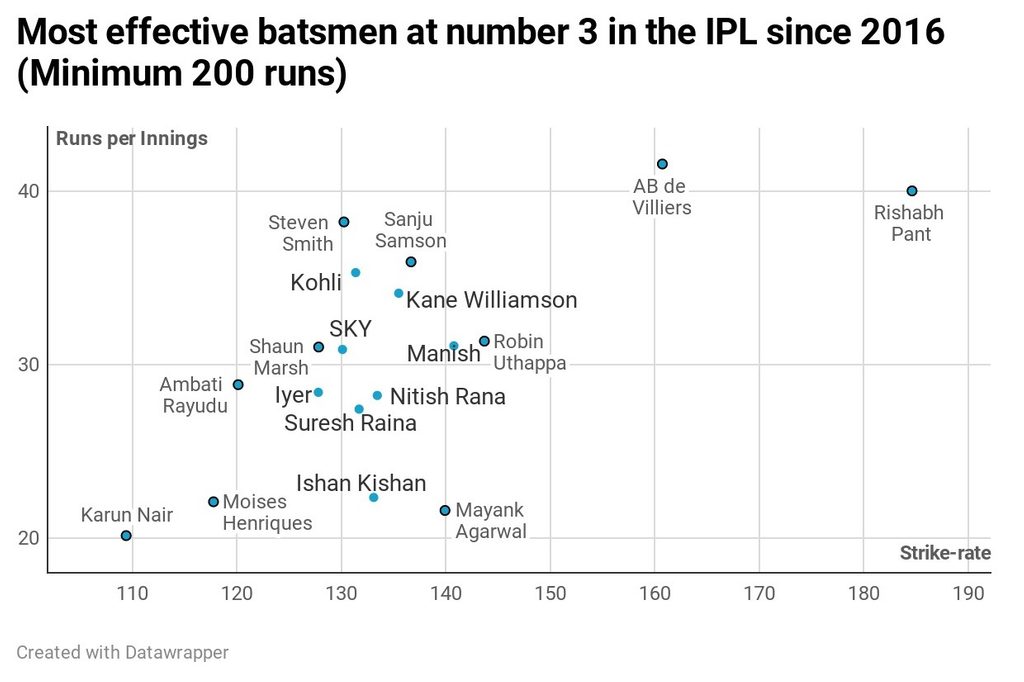
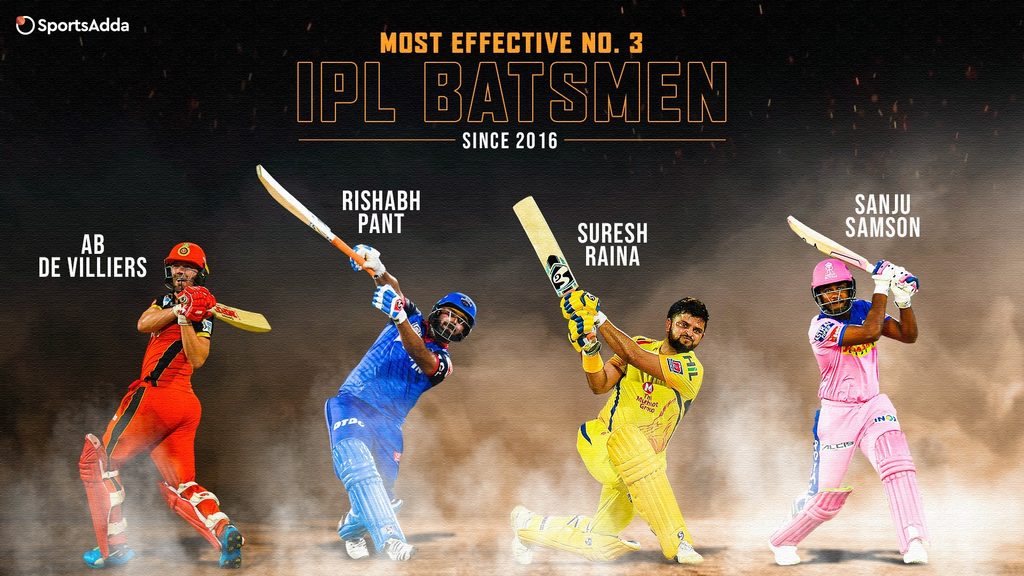
Most effective no. 3 Indian T20 League batsmen since 2016

Batting at number three is not an easy job at all in T20 cricket. When a wicket falls early, they are expected to repair the early damage, and when the same wicket falls after a good opening stand, the number three batsman is expected to walk out and maintain the tempo of the innings as well. So, the job demands high flexibility and adaptation.

Since 2016, as many as 63 batsmen have batted at number three in the Indian T20 League. However, only 23 of them have gone on to bat in five or more innings at this position. Out of them, only 18 have gone on to accumulate 200 or more runs.

So, we have used the sample of these 18 players to find out how they stack up against each other in this role and that has helped us with some interesting observations.

AB de Villiers is a class apart

South African Superman AB de Villiers is not only the second-highest run-getter during this period but has the highest RpI (runs per innings) of 41.55 among these batsmen as well. His strike-rate of 160.73 while accumulating these runs has been unbelievable as well.

de Villiers has 1371 runs to his name in 33 innings during this period and to score so many runs at such an unbelievable strike-rate is a tremendous achievement.

Rishabh Pant is India's answer to de Villiers

The Indian wicketkeeper-batsman is the only batsman who comes the closest to de Villiers RpI during this period. However, his strike-rate of 184.62 has been far better than that of the South African batsman and the best during this period as well. However, Pant has played only six innings and accumulated only 240 runs as compared to de Villiers' corresponding metrics of 33 innings and 1371 runs. But the Delhi southpaw has four scores of 30 or more in these six outings, which includes a best of 97 as well.

Such consistency and brutality leave us to ponder how things could have been if Delhi would have persisted with Pant at number three for a longer period.

Suresh Raina is the highest run-scorer but not the most effective

The left-handed batsman, who plies his trade for Chennai in the Indian T20 League, has the highest number of runs (1645) at number three during this period but his RpI of 27.42 and a strike-rate of 131.71 suggests that he isn't the most effective five of all. In fact, as many as nine out of these 18 batsmen have a higher strike-rate than Raina. In terms of RpI, 13 of them have better numbers as compared to Raina. If both metrics are considered, seven batsmen in total fare better than the southpaw.

Sanju Samson better than the Fab Four?

Virat Kohli, Steve Smith, Kane Williamson and Joe Root are called as the fab four of modern-day cricket. However, only the first three of the aforementioned players have made a name for themselves in T20 cricket. All three of them appear at the top half of this plot too but there is one young player who is rubbing shoulders with these three names in the same zone - Sanju Samson.

The 25-year-old has a marginally lower RpI of 35.91 than Smith's 38.21 but has a far better strike-rate of 136.68 as compared to Smith's 130.26. Not only that, but Samson also fares better than Kohli and Williamson in terms of both RpI and strike-rate. He may be yet to reach the level of these three players across all formats but for now, he has the full bragging rights for this little achievement.

Feature image courtesy: AFP / Arun Sankar

Disclaimer: The views and opinions expressed in this article are those of the author's and do not necessarily reflect the official policy or position of SportsAdda.

The curious case of Ajinkya Rahane in Tests

Ajinkya Rahane has played 65 Test matches in his career, 38 of those overseas while 27 at home. However, he has a unique distinction - his average away from home is better than his average in India, a rarity for Indian batters. Rahane's overseas average stands at 45.16, nearly six more than his home average of 39.28.

The Mumbaikar also has more centuries away from home. Now, with India having tons of options in the Test middle-order, the need to fit in Rahane in home Tests is only justifiable because of his better record overseas and the current form he often carries after away tours. However, that hasn't quite translated into runs so far.

This has been the case right through Rahane's career. At one point, he was considered a better Test batsman than Virat Kohli and the most stable Indian batsman in the line-up overseas. He managed to stay afloat in home Tests too and the general impression as a crisis man and an able replacement for someone like VVS Laxman stood.

This is before India's extended line of home series in 2016-17. In the period before 2017, Rahane averaged a stunning 51.22 away from home and 40.23 at home. The middle-order batsman was at the peak of his prowess and runs came swiftly off his bat. India's home season wrecked Rahane's purple patch and sunk his career into an abyss.

The start of the fall for Rahane

The dip started in late 2016 when India played back-to-back home series against New Zealand and England. He shone in the New Zealand series, blasting a brilliant 188 in 381 balls at Indore. However, by the England series, Rahane had become inconsistent. He made scores of 13, 1, 23, 26 and 0 in that series.

Read | Four Test captaincy candidates for South Africa

When Bangladesh came in early 2017, Rahane started with a promising 82. But he went through the series against Australia and later Sri Lanka (home) with just one fifty-plus score. By 2018, India were back playing overseas and the expectation was that he would thrive. However, he was dropped for the first two Tests in South Africa on the basis of his home form and although he returned well in the third Test, his record in that overseas Test cycle remained poor.

He averaged 28.5, 25.7, 31 and 22.75 in his last tours of South Africa, England, Australia and New Zealand. The once promising away record has withered away as he, like most Indian batsmen, seemed to struggle with seam movement and swing. However, his record on slower tracks at home and in the Caribbean improved. He averaged 72 in the series against Proteas at home in 2019 and 60-plus against Bangladesh at home and 90.33 in the West Indies.

A standout performer in overseas Tests once, Rahane has now turned into another player who thrives at home but struggles abroad. That he has never once found consistency across both conditions is indeed a cause for concern. However, given that he has shone in both conditions at different times, it makes sense to stick by his rough patch. A unique Test career indeed!

Feature image courtesy: AFP / Marty Melville

Root 'very optimistic' England will play home Tests despite virus

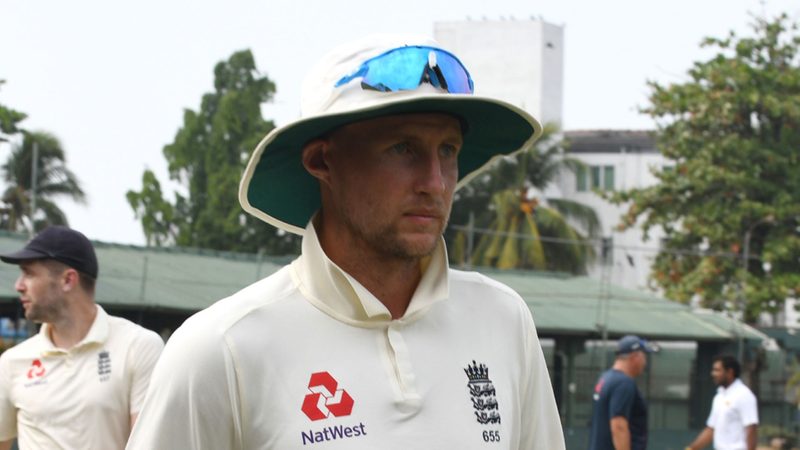
England captain Joe Root has said he is "very optimistic" Test cricket will take place in his side's 2020 home season even if that means the squad have to go into more than two months' of quarantine.

With Britain currently in lockdown because of the coronavirus, a three-Test series against the West Indies scheduled for June has been postponed, with Pakistan due to visit later in a season whose start has now been delayed until July 1 at the earliest.

In a bid to salvage the most lucrative matches following a warning from England and Wales Cricket Board (ECB) chief executive Tom Harrison that a totally wiped out season could cost the board £380 million ($469 million, some reports have suggested an expanded squad of up to 30 could remain in camp for as long as nine weeks, with Tests played behind closed doors.

Root said as long as the British government relaxed lockdown rules sufficiently to let the matches go ahead some international matches could yet be salvaged from an otherwise possibly barren campaign.

Read | India to accept quarantine to save Aussie Test series

"I'm very optimistic, hopefully, that can be the case and it would be a real shame if it wasn't," he told the Cricket show on Sky Sports on Thursday.

"I think a number of people are desperate to see live sport back on telly (television) and the guys are all very much missing playing and would love to get back out there."

Root, who saw England cut short a tour of Sri Lanka in March because of the threat of COVID-19, praised the recent input of ECB medics as he stressed: "Safety is paramount and we need to make sure everyone involved is absolutely safe. 

"I'm sure the discussions will progress and we'll get more information and get closer and closer to cricket being back on and international cricket being played."

'Very different look'

One plan would be to have all internationals this season played at Hampshire's Ageas Bowl and Lancashire's Old Trafford as these grounds, with their on-site hotels, offer better 'bio-security' than other Test match venues.

But it could put a strain on players' private and family lives if they were unable, as is normal in a home season, to go home between matches.

Read | Namaste in, high-fives out for post-virus cricket, says Rahane

Nevertheless Yorkshire batsman Root, whose wife Carrie is expecting their second child, said he and his team-mates could cope.

"It would be the playing group and management, almost in your own little house, throughout and almost in isolation together, not interacting with the opposition, broadcasting crews, officials or media," he explained.

"It'd be a very different look to how a normal Test week would go and the environment we work in but I do think it'd probably be manageable and hopefully that's the case."

But Root, acknowledging the need for England to be "flexible" in a situation that could "drastically change" in the coming weeks, added, "we've got to find safe ways of getting out of the bubble".

"For me, that'd be, would I be able to get to the birth, would I then be in isolation for two weeks, would I be able to be tested coming back into the bubble? 

"Who knows exactly what that'll look like -- they're discussions to be had in the coming weeks.

"We'll have to clear up and make sure things are tightly secure so there's no chance of people getting ill or unwell."

Feature image courtesy: AFP / Lakruwan Wanniarachchi

India to accept quarantine to save Aussie Test series

India's cricket team is prepared to undergo quarantine to salvage a money-spinning Test series against Australia, a top official said Friday, but there was less optimism about this year's Twenty20 World Cup taking place Down Under.

Virat Kohli's men are scheduled to contest a four-Test series in Australia towards the end of the year but will need to isolate for two weeks under current COVID-19 rules.

Board of Control for Cricket in India treasurer Arun Dhumal said the Test team were willing to make that sacrifice to save the series, which cash-strapped Cricket Australia desperately needs to replenish its coffers.

"There is no choice - everyone will have to do that (quarantine). You would want to resume the cricket," Dhumal told Fairfax newspapers.

"Two weeks is not that long a lockdown."

Australia this month dethroned India as the world's top-ranked Test team, setting up the series as a blockbuster rivalry.

The series would also generate hundreds of millions of dollars for a host organisation struggling during the coronavirus shutdown.

Revenue from the series is so important to Cricket Australia that it has proposed adding a fifth Test, which would mean ditching a one-off Test against Afghanistan in November.

Read | Namaste in, high-fives out for post-virus cricket, says Rahane

Dhumal said it was "too early" to make a call on extending the Test series, suggesting Indian broadcasters would prefer more limited-overs matches instead because they generate more money.

"They will want to have revenue and revenue most likely will come from ODIs or T20s much more than a Test match," he said.

While it would be relatively straightforward for Australia's government to allow the Indian team to enter the country for a bilateral series, Dhumal said staging the 16-nation T20 World Cup was another matter.

He also questioned whether elite players would be ready for the October tournament.

"They will have been out of cricket for a long time. Would you want to be without training for that long and straight away go and play [the] World Cup?" he asked.

"That is a call every board has to take. It seems to be difficult."

Feature image courtesy: AFP / Peter Parks